Open access to The Heinlein Journal archives is being considered as a way to maximize the reach, impact, and preservation of Heinlein scholarship by making it freely available and easily discoverable to readers, teachers, and researchers worldwide.
The Heinlein Society became stewards of The Heinlein Journal following the death of its founder Bill Patterson in 2014.
The Journal has never had a large readership. The Society’s board of directors is considering a plan to publish old articles on the web and we’d love to hear the opinions of the membership and larger community.
So far, the contributors we’ve contacted have all agreed. Some comments:
“I strongly support making The Heinlein Journal freely available,” responded Bruce P. Dunn, PhD, retired professor, author, and contributor of the Heinlein Journal article “Clifford C. Furnas: An early source for Heinlein’s fiction” (THJ #32, Spring 2025).
“You absolutely have my unconditional permission to release under any terms whatsoever, anything that I have ever written for or to the Heinlein Society,” said Kate Gladstone, contributor of three pieces for the Journal over the years. “I hope that such a decision is indeed made.”
Arguments for open access

Opening Heinlein scholarship up to a global audience. Credit: WorldStockStudio / Shutterstock
1. Wider dissemination and accessibility
By removing paywalls, the journal’s content becomes available to a global audience, including independent scholars, students, educators in underfunded institutions, and the general public. This broadens the reach of research findings significantly.
2. Increased research impact and citations
Studies have shown that open-access articles often receive more citations than those behind paywalls. Open access articles are found more easily via general search engines like Google Scholar. This increased visibility can lead to greater engagement with the literary figure’s work, encouraging more robust and diverse scholarship.
“Open access is part of a growing trend in academic publication,” noted Dr. Dunn. “I have done a search using Google Scholar, and it can’t find my Furnas article. It may not recognize The Heinlein Journal as a scholarly journal… If the journal were made open access, then articles would be much more visible to search engines.”
3. Democratization of knowledge and global equity
Paywalls create a “digital divide,” limiting access to research for independent scholars, students at less-funded institutions, and researchers in developing countries. Making the journal open access fosters a more equitable playing field, allowing a wider range of voices and perspectives to contribute to the academic conversation.
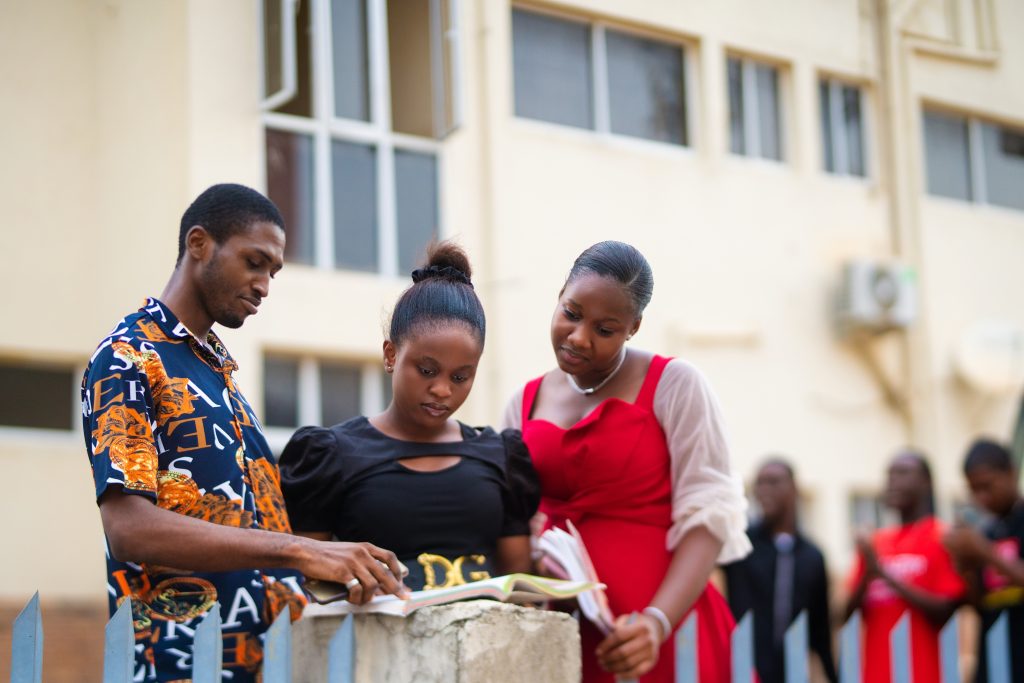
Opening access to past Heinlein scholarship will level the playing field for researches in developing countries, presenting opportunities for new voices and perspectives. Credit Goallord Cerativity / Shutterstock
4. Enhanced public engagement and education
Open access allows K–12 educators, general readers, and enthusiasts to engage with scholarly work, enriching education, fostering intellectual curiosity, and bridging the gap between academia and the public.
The Heinlein Society’s mission speaks to these goals: “We will ‘Pay it Forward’ through support of educational, literary, and charitable endeavors including…the creation and distribution of teaching materials, [and] support of The Heinlein Journal.” (Bylaws, Article I, Section 2: Mission).
5. Support for interdisciplinary research
Easy access to content allows scholars from other disciplines (e.g., history, sociology, art history) to incorporate literary studies findings into their own work, leading to new insights and innovative, interdisciplinary projects that might otherwise be hindered by access restrictions.
6. Greater visibility for Heinlein’s works
A dedicated open-access journal can serve as a central, highly visible hub for all research related to Robert A. Heinlein (as the Journal always has in print, albeit serving only paid subscribers), raising the Grand Master’s profile and helping ensure his enduring relevance in contemporary scholarship and culture.
“I think Heinlein scholarship is lagging behind Bradbury, Clarke, and Vonnegut scholarship,” said Victor Koman, PhD, three-times Prometheus Award-winning author and contributor of the Heinlein Journal article “I Thought I could use Imperium as an example of a novel by a real fascist until I discovered it wasn’t a novel…” (THJ #19, July 2006).
7. Author benefits and copyright retention
Contributing authors (past and future) would retain the rights to their work through less restrictive licenses (such as Creative Commons licenses), giving them greater control over how their material is used in teaching or future publications.
8. Long-term preservation
Open access platforms and institutional repositories often have robust systems for assigning persistent identifiers (like DOIs) and ensuring the long-term digital preservation of content, safeguarding the scholarship for future generations of readers and researchers.

Credit Mayam Studio / Shutterstock
Challenges
While the benefits of open access are substantial, a few practical challenges exist:
- Society membership benefit — The Heinlein Journal is currently a membership benefit for Heinlein Society members at the Regular and Life levels. Some Life members may have chosen that level in part to gain full access to the Journal archives, and open access could devalue the premium membership, and perhaps seem to be an unfair change to the terms of their paid membership benefit. The current idea is to release all the archives, while perhaps making new issues available exclusively to Society members for a period of six to 12 months. What do you think?
- Permissions are ambiguous — While the Society possesses some of Bill’s correspondence, we don’t have it all, and Bill’s arrangements with contributors were somewhat informal. There are no signed license agreements, and his arrangements appear to have been made informally over email, phone calls, or in-person conversations. The argument can be made that the Society acquired licenses to all THJ contributors’ works from Bill’s estate, however there was never any prior agreement about republishing or open access. The Board feels it’s responsible to secure a second, more formal permission. We have started contacting contributors, and while everyone has so far agreed enthusiastically, it will take some time to track everyone down (and some authors have passed away).
- Technical challenges — The archives of the Journal will take significant work to turn into online articles with adequate structured metadata, good search and filter abilities, a good reader experience, and custom formatting for things such as footnotes.
- Volunteer effort — Like all Society activities, the Journal is edited and produced by volunteers. Adding a new endeavor may require more volunteer assistance. Can you help?
Ultimately, shifting to an open-access model broadens dissemination of knowledge of the important work of Robert A. Heinlein, benefiting the scholarly community and the general public as well.
Authors who have assented
The following contributors have already agreed to having their Heinlein papers, letters, etc, be republished online in a new, open Heinlein Journal:
- Alec Nevala-Lee
- Amy Baxter
- Barton Paul Levenson
- Bill H. Patterson, Jr. (estate)
- Bill Higgins
- Bill Mullins
- Bruce P. Dunn, PhD
- C. Herbert Gilliland, PhD
- Dan Henderson
- David Brin
- Elisabeth Anne Leonard
- Farah Mendlesohn, M.A.
- Gal Haimovich
- Gary Westfahl
- Glen W. Olson
- Gordon Sollars
- Gunel Alasgarova
- James Gifford (estate)
- Jane Davitt
- John DeChancie
- John H. Seltzer
- John Tilden
- Jonathan R. Eller
- Joseph T. Major
- Kate Gladstone
- Kendall Blanchard
- Lisa N. Edmonds D’Amico
- Mark Bult
- Michael Cassutt
- Michael Farinola
- Michael Kagan
- Mike Griffin
- Oberon Zell
- Peter M. McCluskey
- Peter Scott
- Randy Jost
- Ray Bradbury (estate)
- Robert Gorsch
- Robert J. Grieve
- Robert James, PhD
- Spider Robinson
- Tim Morgan
- Victor Koman, PhD
What do you think?
We want to know what all Society members think of the plan to open access to the Heinlein Journal archives.
Please let us know here in the comments (bottom of this page), in a private email via the Contact page, or via the Society’s Facebook page.
Authors still being contacted
Contributors to The Heinlein Journal, 1997–2025
In particular, we want to hear from those listed below! If you didn’t receive an email from us by now, it’s because we don’t have a current email or phone number for you. Please contact us!
- Alati M. Miltier
- Alexei Panshin (estate)
- Andrew Thornton
- Audrey Gifford
- BE Allatt
- Bill Ritch
- Brad Linaweaver (estate)
- Bradford Lyau
- Charles Martin
- Chris Leslie
- Christopher Bertucci
- Christopher Brooks
- Dafydd ab Hugh
- Dale Dietzman
- Dan’l Danehy-Oakes
- Dave Landry
- David C. Wright
- David M. Silver (estate)
- David S. Wright, Sr.
- David Wright, Sr.
- Dawn Baker
- Diane Parkin-Speer
- Donald M. Hassler
- Edward M. Wysocki, Jr., Ph.D.
- Eleanor Wood
- Eric Picholle
- George Carlisle
- George E. Slusser (estate)
- Greg Stone
- Gregory Benford
- Irvin Koch
- Irving Koch
- J. Neil Schulman (estate)
- Jack Kelly
- Jack Thornton
- Jay Stribling
- Jeffrey Cook (estate)
- Jim Cunningham
- John Boggs
- John C. LeGere
- John P. Hey
- Josh Kimbler
- Kyle S. Bozeman
- Laurie A. MacDonald
- Leon Stover (estate)
- Linnea Jackson
- Members of the Internet Heinlein Readers’ Group:
- ATOMICBOHR
- Doc4Kidz
- DTIBBE2926
- GCEMS909
- Lstuder
- PaganKalee
- Portia1972
- Michael Garrett
- Michael Hunter
- Mike Craig
- Ogden Johnson, III
- Oscar De Los Santos
- Patrick Shepherd
- Phillip H. Owenby
- Rachel Luckman (McGrath-Kerr)
- Rita Bottoms (estate)
- Robert G. Kennedy III
- Ron Garmon
- Ron Harrison
- Rosie P.
- Sean Gaffney
- Solomon Davidoff
- Tim Kyger
- Tina Black (estate)
- Ugo Bellagamba